Product Security

Product Security Assessment Services

Threat

Led by realistic attack paths

Expert

Manual testing and validation

Prioritized

Findings ranked by product risk

Actionable

Clear remediation roadmap

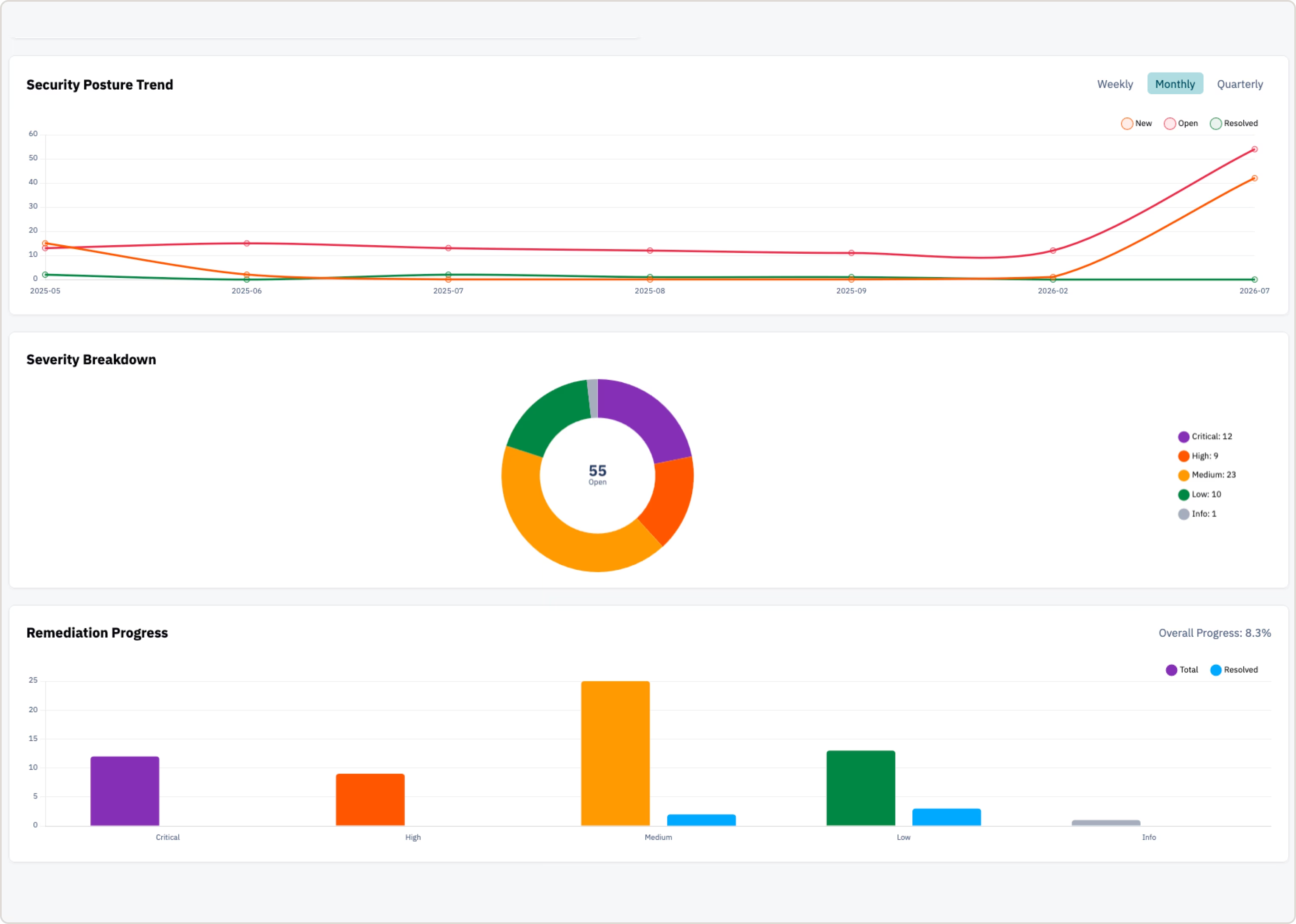
The assessment goes beyond a one-off product pentest. It connects attack paths across design, code, cloud, dependencies, and delivery workflows. This helps your team fix immediate findings and reduce the conditions that create repeat vulnerabilities.

What it is

What is a product security assessment?

It reviews how software is designed, built, deployed, and operated. Scope may combine threat modeling, manual penetration testing, secure code review, cloud review, and SDLC analysis to uncover exploitable issues and their underlying causes.

Arrow Counter Clockwise

Product-wide

Architecture, application behavior, infrastructure, and development practices

Calendar Dots

Defined scope

Agree workstreams, access, safety limits, and delivery dates before testing

Coverage

What we assess

01

Architecture & design

Threat modeling of your system to find design-level weaknesses before they ship.

02

Application & API security

Manual pentesting of your product's attack surface, beyond the OWASP Top 10.

03

Source code

Secure code review of high-risk components to catch flaws black-box testing can't reach.

04

Cloud & infrastructure

Configuration, identity, and privilege review across AWS, Azure, or GCP.

05

SDLC & DevSecOps

How security is (or isn't) built into your pipeline, dependencies, and release process.

06

Data protection

How sensitive and customer data is stored, encrypted, and access-controlled.

Beyond a pentest

Why product security beats a one-off pentest

A pentest reviews the running application. A product security assessment also examines design, code, infrastructure, and delivery practices to reduce recurring risk at the source.

Method

Our assessment methodology

01

1. Threat model

We map your attack surface and the most likely paths an attacker would take.

02

2. Assess

Manual pentesting, secure code review, and architecture review, prioritized by the threat model.

03

3. Prioritize

Findings ranked by real business risk, not raw CVSS.

04

4. Report & validate

Receive a prioritized remediation roadmap, with fix validation included where agreed.

Product assurance

Standards-led testing. CRA-ready evidence.

We use standards relevant to the product and its market, then translate technical findings into evidence your engineering, risk, and compliance teams can use.

NIST SSDF

Secure software development practices across the product lifecycle.
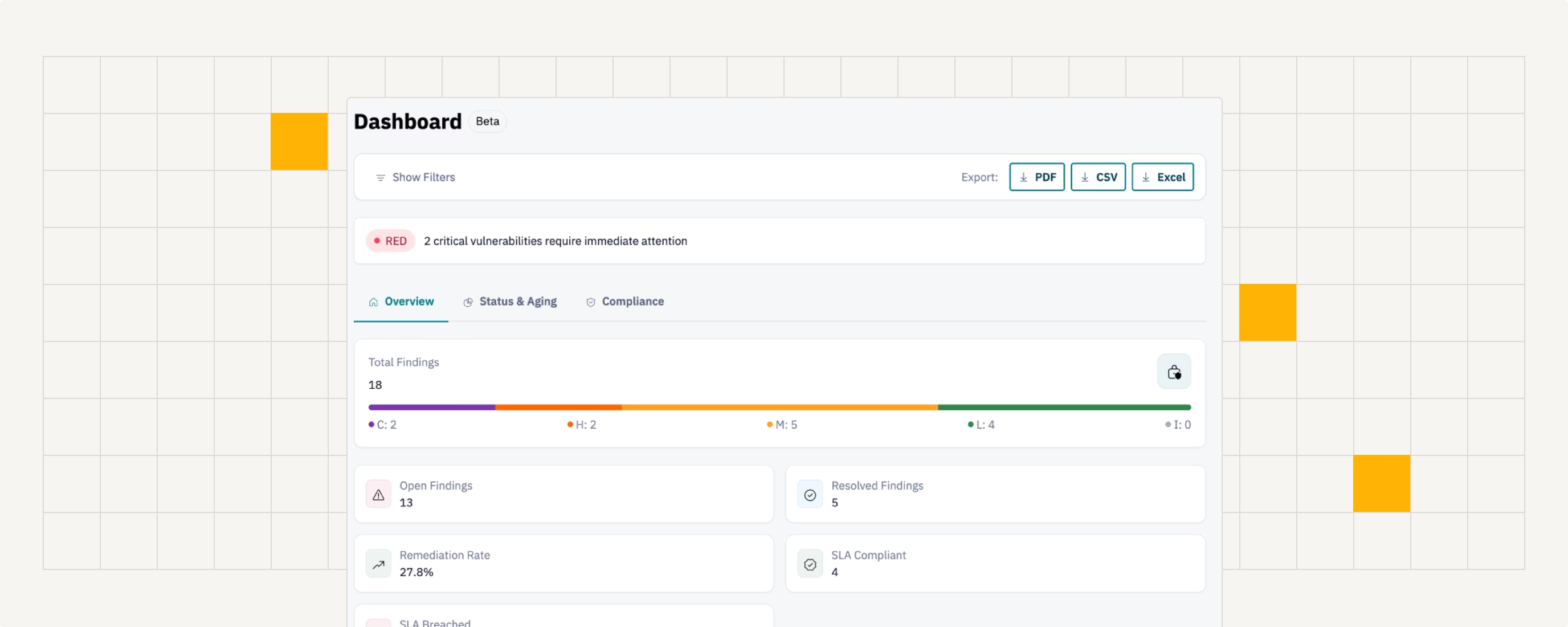
OWASP SAMM

Software assurance maturity across governance, design, implementation, and verification.

OWASP ASVS

Application security verification requirements for relevant product components.

Sector standards

IEC 62443, ETSI EN 303 645, and other product-specific requirements where applicable.

Cyber Resilience Act readiness

Blaze can assess technical and lifecycle controls relevant to CRA readiness and map confirmed gaps into practical remediation evidence. This supports conformity work; it does not certify compliance.

  • Product risk assessment and threat modeling
  • Secure-by-design and secure-by-default controls
  • Vulnerability handling, SBOM, and dependency risk
  • Security updates, support periods, and post-market processes
  • Findings mapped into usable technical evidence
Reporting obligations11 Sep 2026 Main obligations11 Dec 2027
Triggers

When you need a product security assessment

Before a major release or re-architecture

Catch design-level risk before it ships instead of patching after.

When customers demand deeper assurance

Enterprise and regulated buyers often require deeper assurance than a standard pentest provides.

When the same bugs keep recurring

If the same classes of flaw return release after release, the process needs review.

Ahead of a raise or acquisition

Security posture affects valuation and diligence outcomes.

Frequently asked questions

A pentest attacks a defined running system. A product security assessment adds threat modeling, code review, architecture, and SDLC analysis to explain why vulnerabilities recur and how to reduce the underlying risk.
Scope may include threat modeling, application and API testing, secure code review, cloud and infrastructure analysis, SDLC review, and data protection. Deliverables include prioritized findings and a remediation roadmap.
Threat modeling maps components, data flows, trust boundaries, and realistic attacker goals. It helps focus testing and code review on the paths most likely to create material business impact.
Secure code review is a manual examination of high-risk source code for flaws that external testing may not reveal, including unsafe authorization, data handling, and injection paths.
Timing depends on product size, codebase, and the domains included. Blaze confirms the workstreams, sequence, and delivery dates during scoping.

Ready to address systemic product risk?

See where risk enters your architecture, code, and delivery process - and how to reduce it.