GLBA Penetration Testing Services
Test applications, APIs, cloud, and networks that handle customer information. Get validated findings, practical remediation guidance, and reporting aligned to the FTC Safeguards Rule.

GLBA penetration testing for financial institutions
Focus testing on the applications, access paths, and infrastructure that could expose customer information or disrupt critical financial services.
Test the controls protecting customer information
Assess authentication, authorization, data exposure, session handling, encryption boundaries, and segmentation through realistic attack paths.
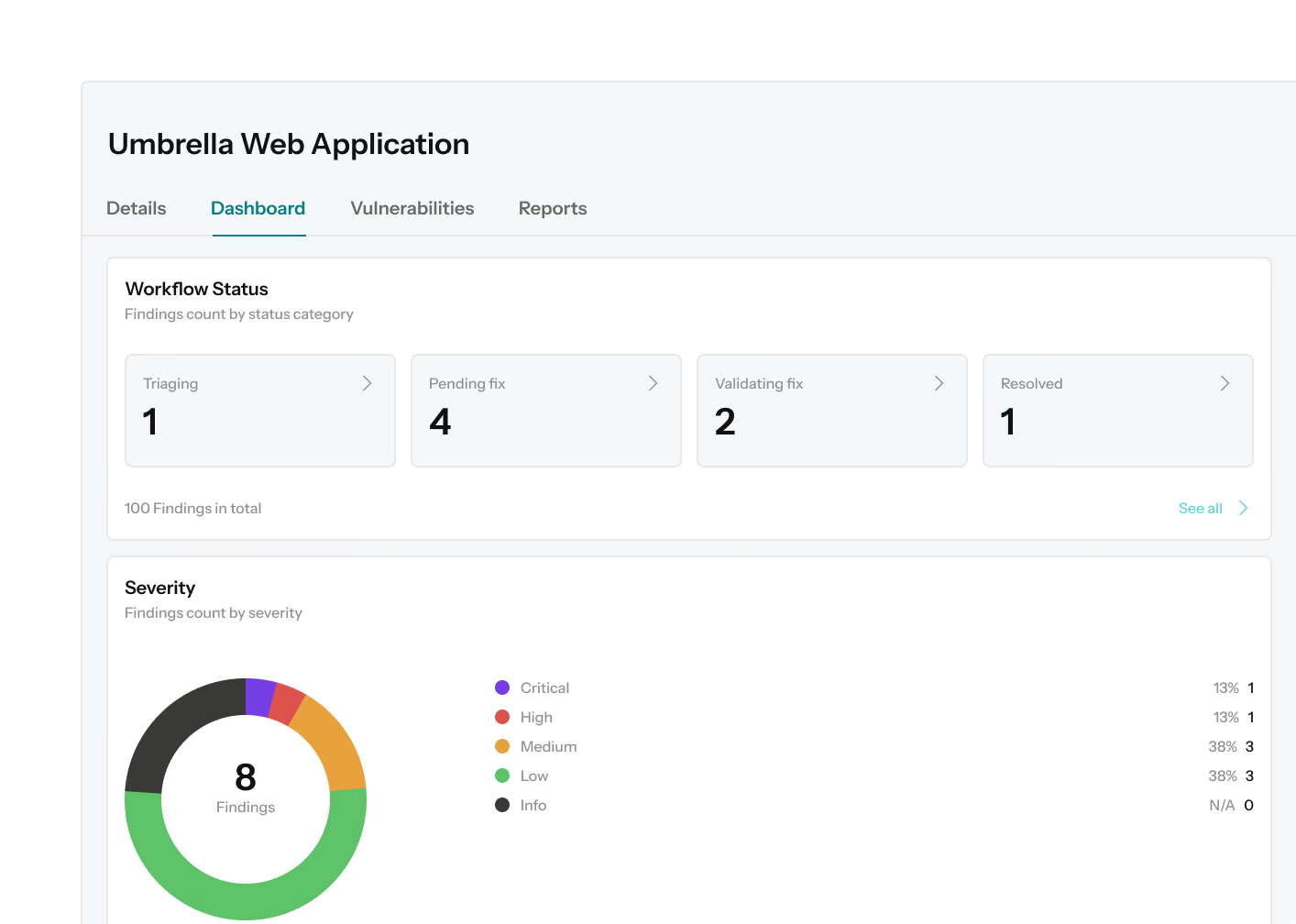
Follow customer information across your environment
Scope customer portals, financial applications, APIs, cloud services, identity systems, external infrastructure, internal networks, and critical integrations.
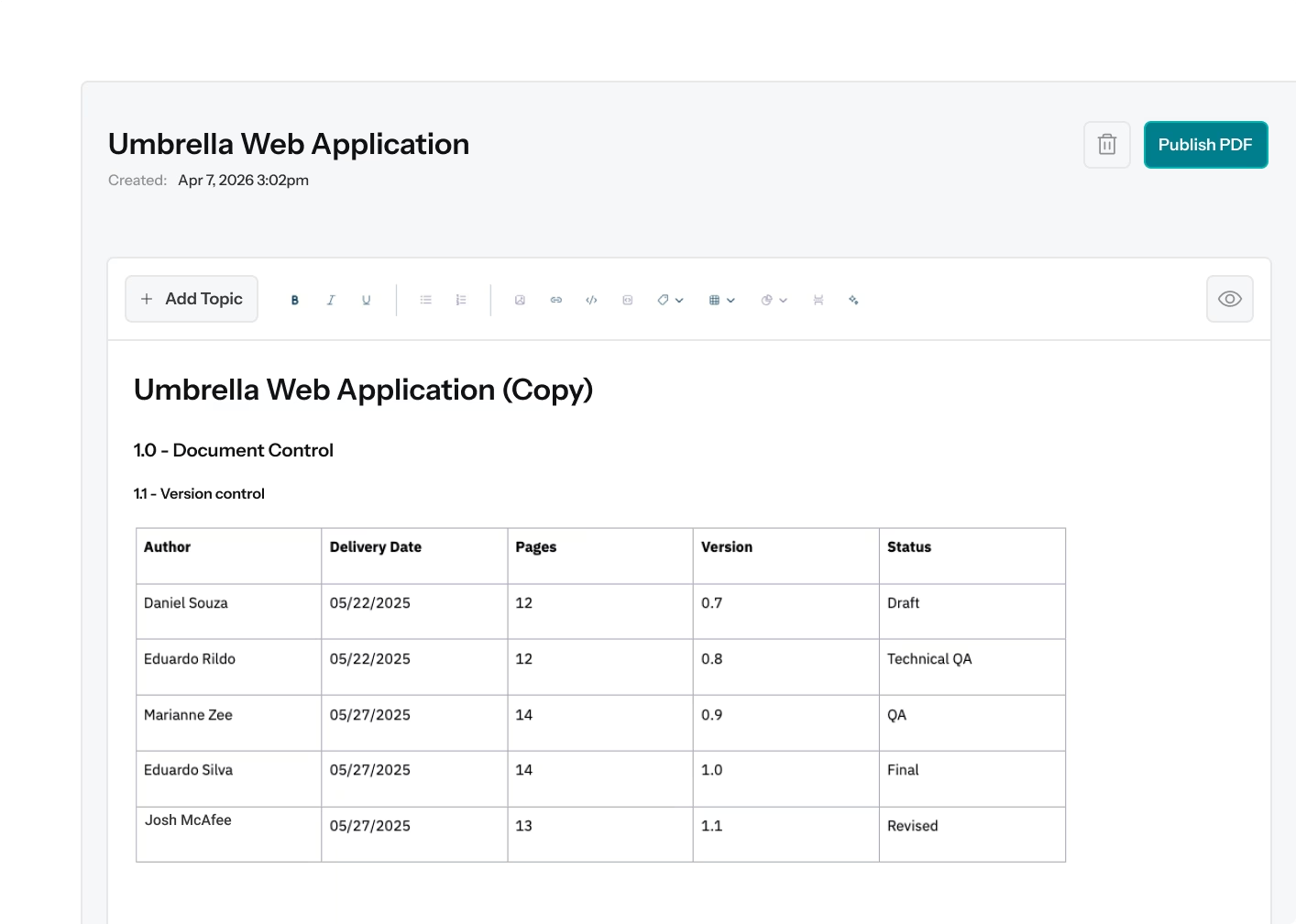
Track findings through remediation
Use the Blaze Portal to assign findings, document fixes, and keep available validation evidence organized for security and compliance teams.
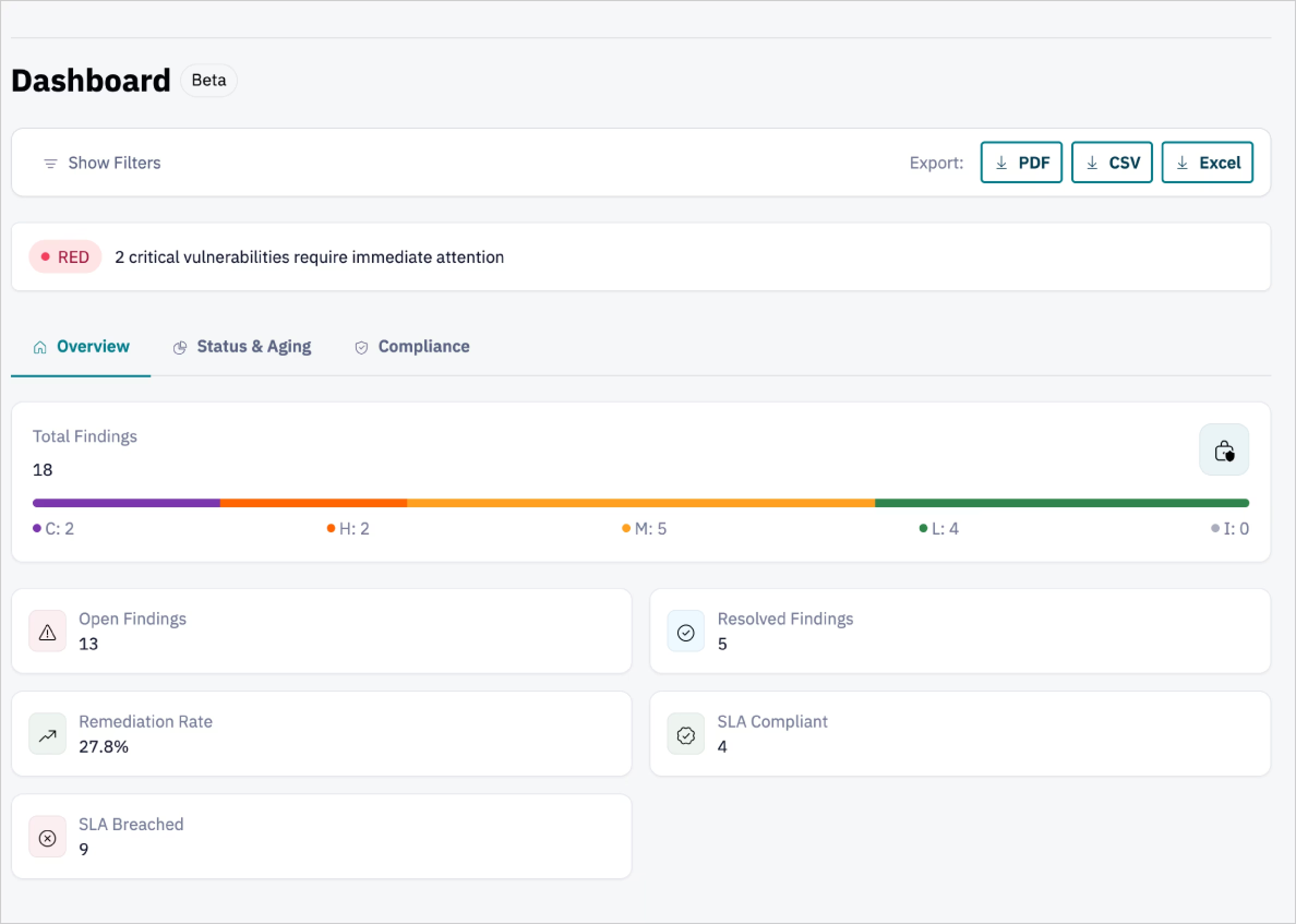
Where penetration testing supports GLBA
Testing can support required safeguard evaluation. It does not replace a complete GLBA compliance assessment or determine which provisions apply to your institution.
Requirement
How Blaze helps support it
§314.4(b)
Risk Assessment
Identifies exploitable risks to the security, confidentiality, and integrity of customer information across in-scope systems.
§314.4(c)
Safeguards Design
Tests whether implemented safeguards — access controls, encryption, MFA, change management, and logging — hold against real attack paths.
§314.4(d)
Monitoring & Testing
Documents a scoped penetration test that may support §314.4(d)(2) when annual testing is the institution’s chosen path.
§314.4(f)
Service Provider Oversight
Evaluates security controls for service providers or third-party systems that store, process, transmit, or access customer information.
§314.4(g)
Information Security Program Evaluation
Provides technical testing results your Qualified Individual can use to evaluate and adjust the program.
Clear evidence for security and compliance teams
A GLBA pentest should help engineers fix risk and give reviewers a clear record of what was tested.

Relevant Safeguards Rule context
Connect validated findings to applicable safeguards without treating the pentest as a complete compliance assessment.

Remediation workspace
Track findings, owners, fixes, and available validation evidence in one place.

Shareable reporting
Share scope, methodology, findings, and remediation status with security leaders, auditors, and examiners.

CREST-accredited provider
Work with a named testing team, with findings reviewed before delivery and direct access throughout the engagement.

Reusable technical evidence
Use relevant findings in other assurance work where scope and requirements align.

Fix validation
Confirm whether agreed fixes address the original finding when validation is included.
Reuse relevant findings
Some findings may support other assurance work when scope and requirements align. Each framework still has its own assessment obligations.

SOC 2
Use relevant security-control findings in customer assurance and SOC 2 work when scope aligns.
ISO 27001
Use relevant technical evidence to support risk treatment and control evaluation when scope aligns.
Frequently asked questions

Recommended services
Related services for financial institutions and fintech teams.

Penetration Testing
Manual testing across web apps, APIs, mobile, cloud, and networks, with findings reviewed before delivery.
.avif)
Adversary Simulation
Goal-driven red team and purple team exercises that test detection, response, and containment against realistic attack paths.

vCISO & Advisory
Fractional security leadership for program ownership, risk decisions, compliance preparation, and executive reporting.
Ready to scope your GLBA pentest?
Get a focused testing plan for the systems that handle customer information.
