GDPR Penetration Testing for Article 32
Test applications, APIs, cloud, and infrastructure handling personal data, with clear findings and evidence for Article 32 security work.

GDPR penetration testing for personal-data systems
Find exploitable weaknesses, prioritize remediation, and document how relevant technical security measures perform under realistic attack conditions.
Support regular testing with practical evidence
Document scope, methodology, findings, remediation priorities, and available fix-validation results for security-of-processing reviews.
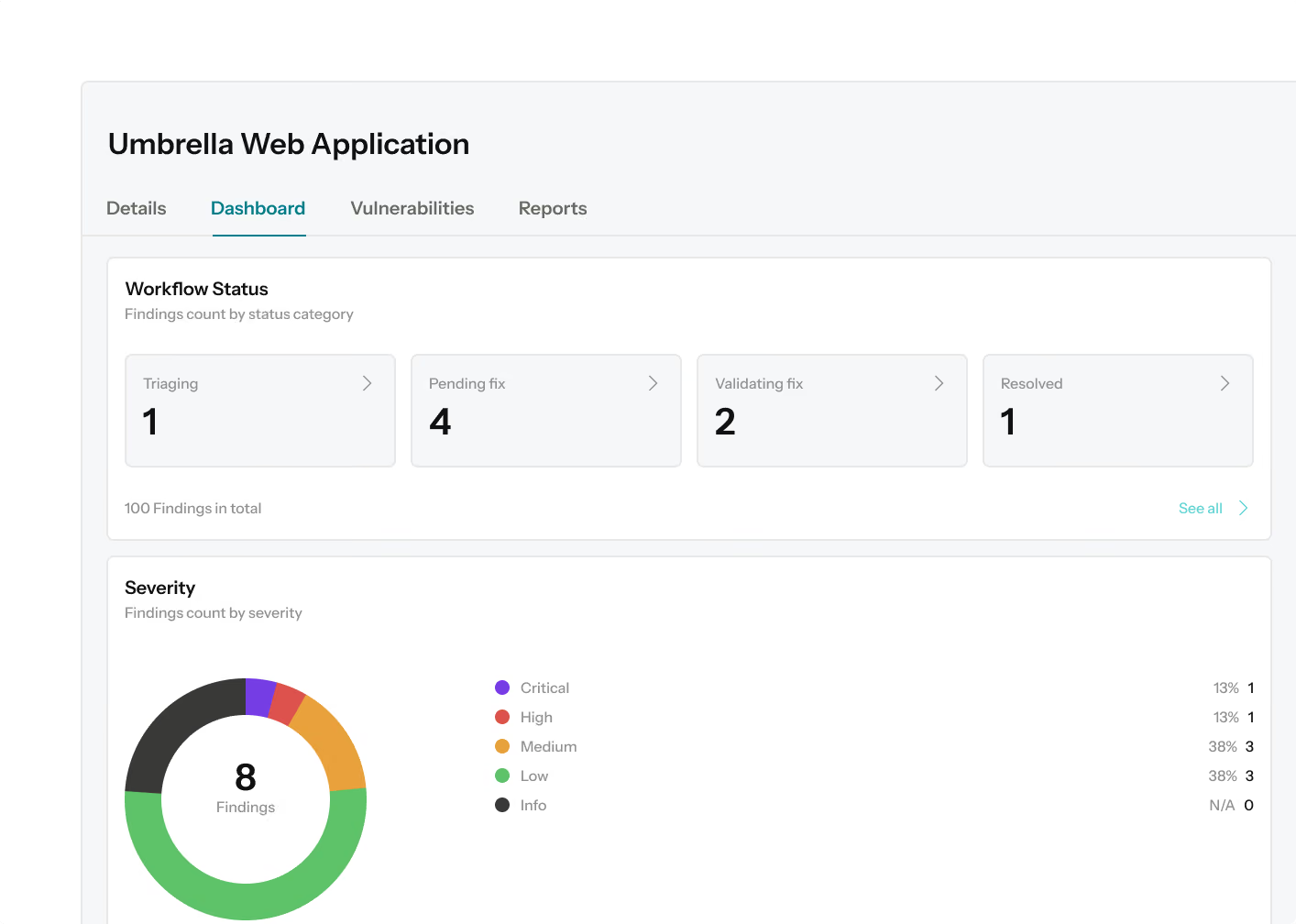
Find exposure across connected environments
Test authorized applications, APIs, cloud services, identity systems, networks, and integrations that store, process, or transmit personal data.
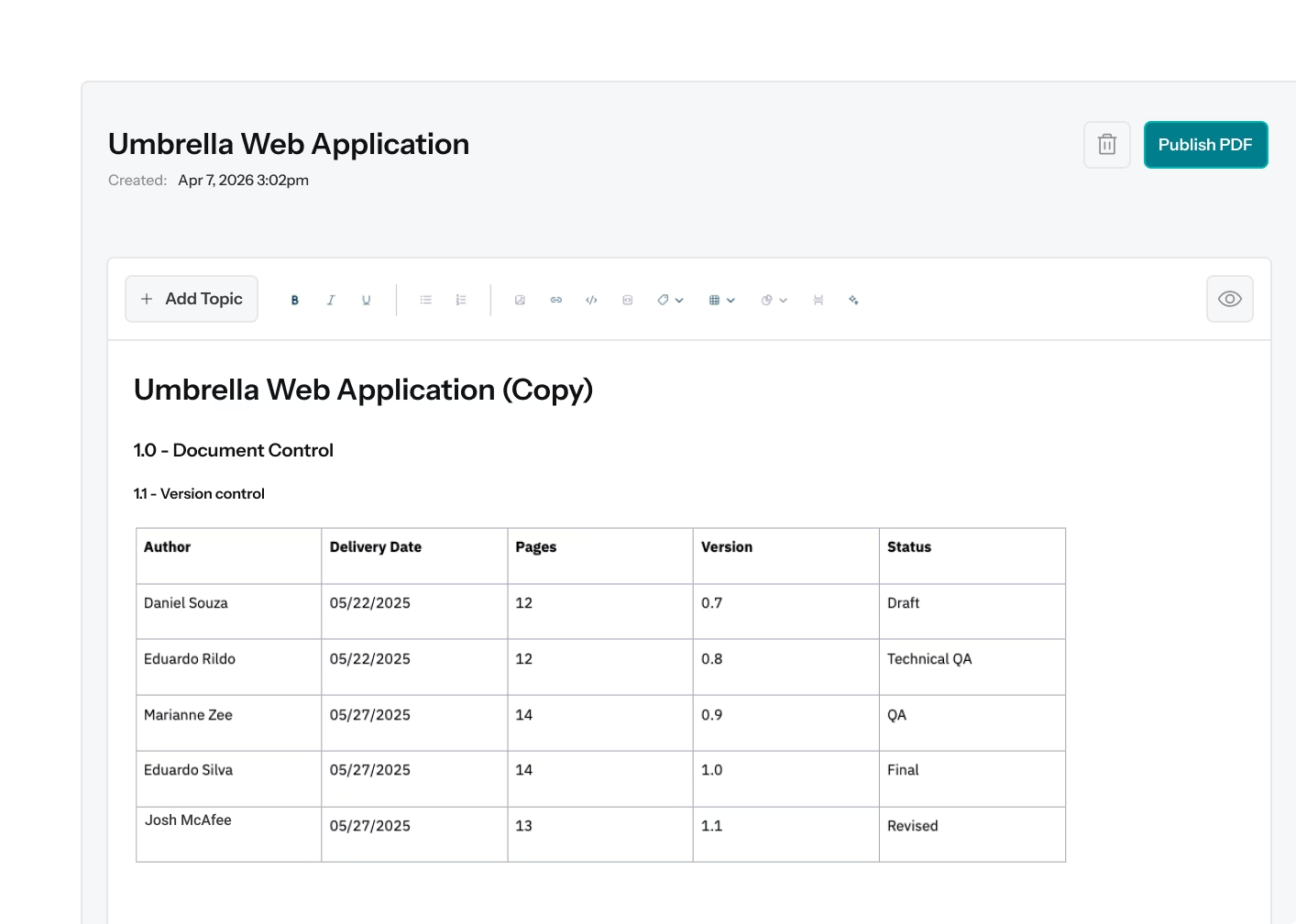
Turn findings into accountable action
Give security, engineering, privacy, and risk teams a shared record of findings, owners, fixes, and validation status.
How a pentest supports GDPR security work
Penetration testing can support Article 32 and related risk decisions. It does not establish GDPR compliance or replace legal, privacy, and organizational controls.
Requirement
How Blaze helps support it
Art. 5(1)(f)
Integrity and confidentiality
Tests whether personal data is protected against unauthorized access, alteration, or loss.
Art. 25
Data protection by design and by default
Validates whether security is built into applications, APIs, and data flows, not bolted on.
Art. 32(1)(b)
Ongoing confidentiality, integrity, availability and resilience
Assesses the resilience of systems processing personal data against real attack paths.
Art. 32(1)(d)
Regular testing, assessing and evaluating effectiveness
Provides the independent, documented testing that this obligation explicitly requires.
Art. 33 / 34
Breach notification readiness
Surfaces exploitable exposure before it becomes a reportable personal-data breach.
Technical findings your teams can act on
Focused testing should clarify what was tested, what is exploitable, what to fix, and what can be validated.

Article 32 context
Relate relevant findings to security-of-processing objectives without presenting the report as legal approval.

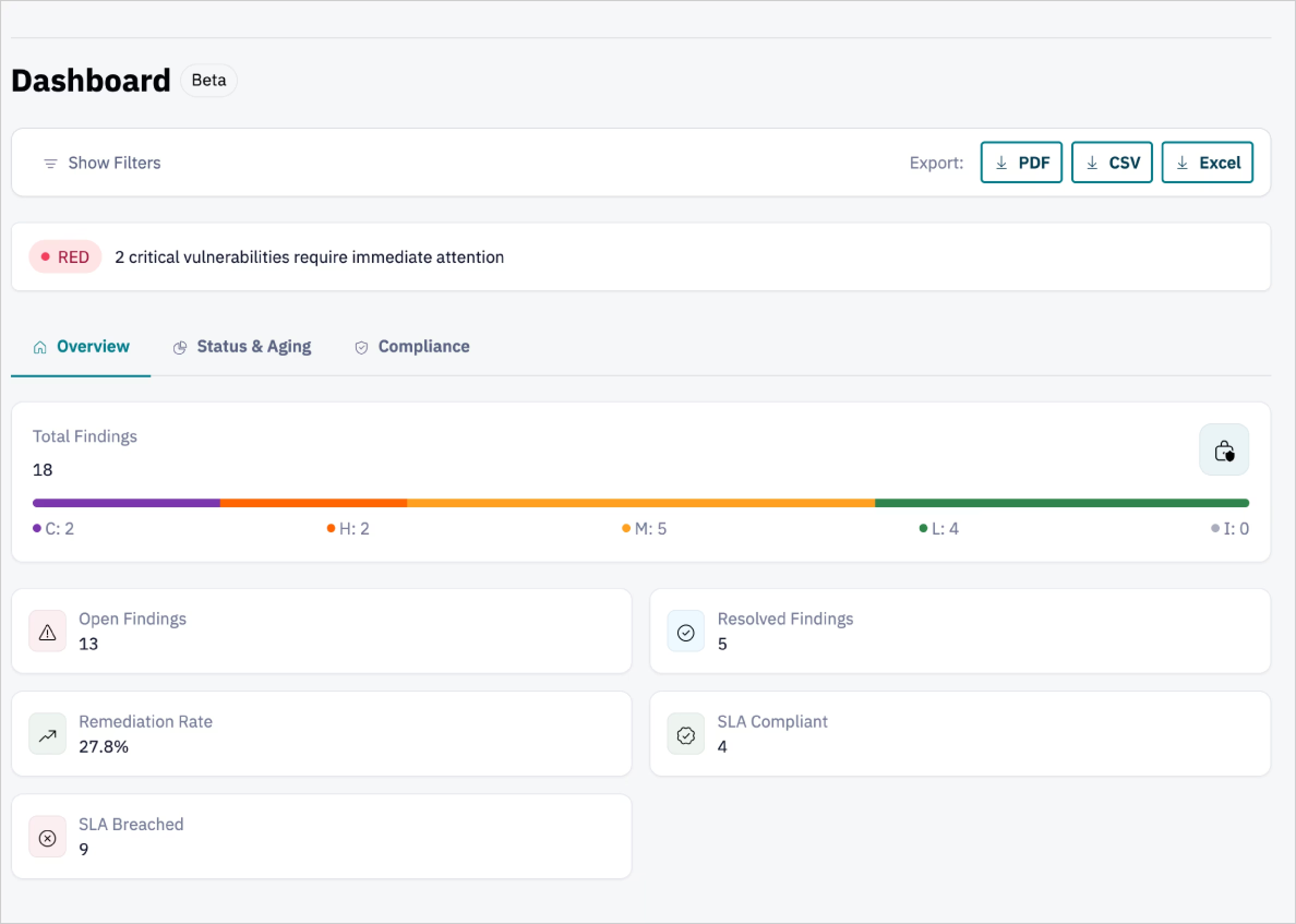
Remediation workspace
Track severity, owners, fixes, and validation status without chasing email threads, spreadsheets, or static reports.

Accountability documentation
Export reports and summaries for internal reviews, DPIAs, audits, and customer security assessments where relevant.

CREST-certified testing
Work with named CREST-certified testers across application, API, cloud, network, and data-protection risk.

Multi-framework support
Reuse relevant findings for ISO 27001, SOC 2, NIS2, DORA, and customer reviews when scope and requirements align.

Fix validation
Re-test agreed fixes and document the updated state when validation is included in the selected package or program.
Reuse relevant findings
Relevant findings may support other assurance work when scope and requirements align. Each framework retains its own obligations.

ISO 27001
Use relevant findings in risk treatment, vulnerability management, and control-improvement work.
SOC 2
Use relevant findings to support security-control evidence where systems and requirements overlap.
Frequently asked questions

Services that support data-protection risk
Combine GDPR-focused penetration testing with broader security validation, adversary simulation, or program guidance.

Penetration Testing
Senior-led testing across web apps, APIs, mobile, cloud, and networks, with AI-assisted analysis to expand coverage and researcher validation for every finding.
Adversary Simulation
Red team and purple team exercises that test how your organization detects, responds to, and contains realistic attack scenarios.

Ready to scope your GDPR pentest?
Get a focused testing plan for the systems and services handling personal data.
