TPN Penetration Testing for Content Security
Test the applications, infrastructure, identities, and transfer paths handling valuable media content, with clear findings for remediation and TPN assessment work.
Test the systems behind valuable media content
Find exploitable weaknesses across production, post-production, localization, distribution, and cloud workflows before content owners or attackers do.
Bring clear evidence to your TPN assessment
Document scope, findings, remediation priorities, and available validation evidence without presenting the pentest as a TPN certification or approval.
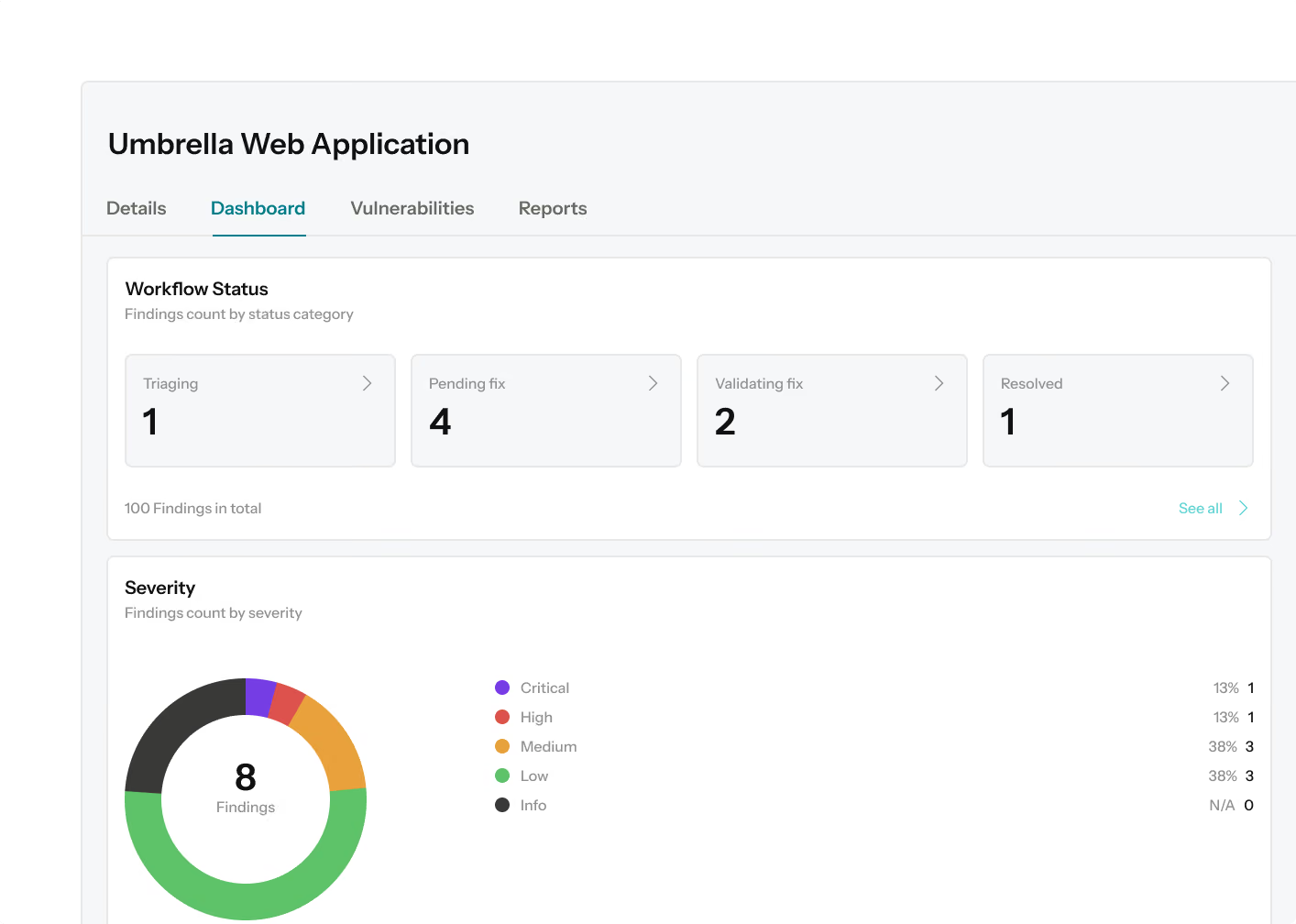
Follow content across connected workflows
Test authorized applications, APIs, storage, identity, transfer tools, and infrastructure used to create, process, or distribute content.
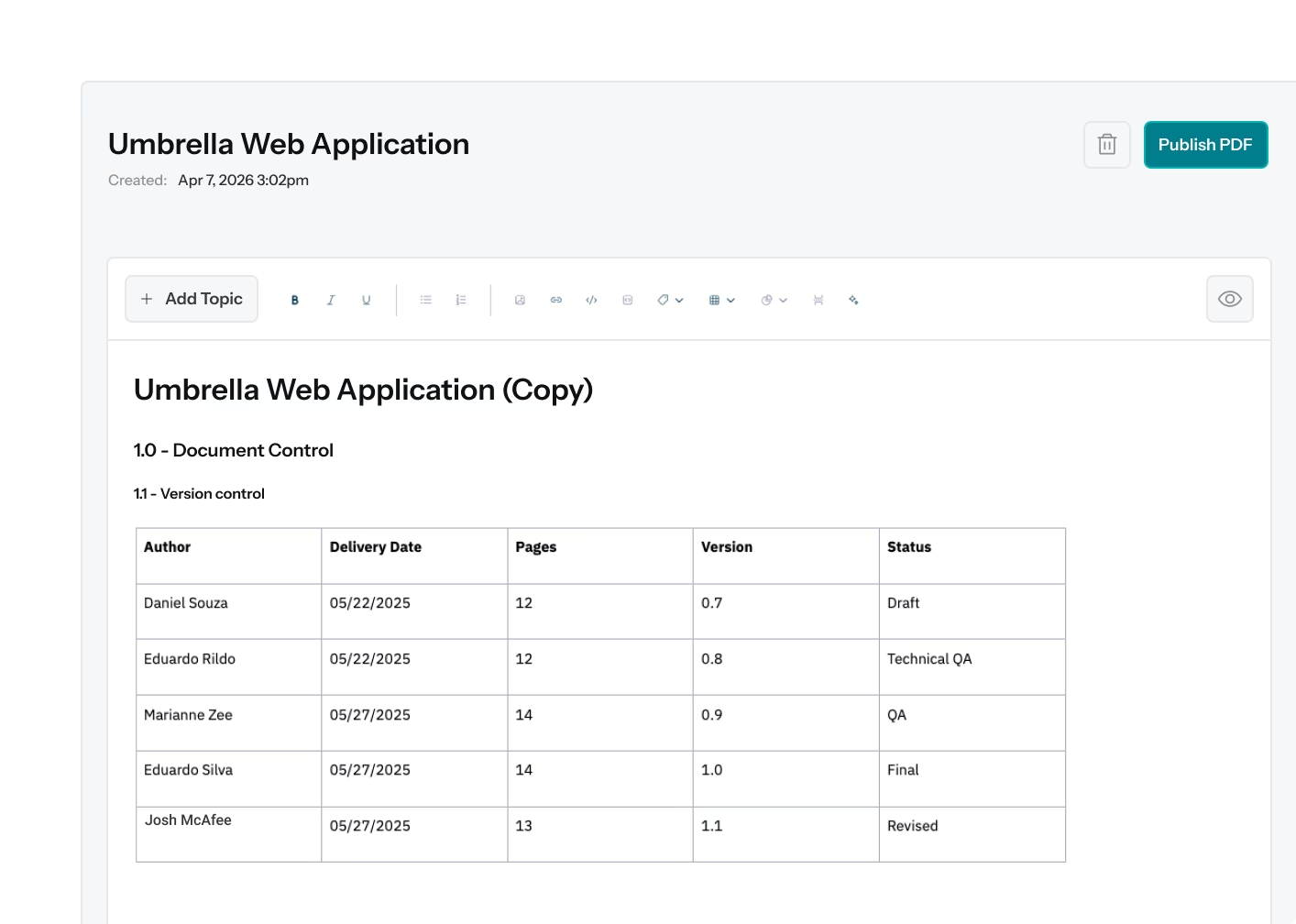
Track findings through remediation
Give security, engineering, and content teams a shared record of findings, owners, fixes, and available validation evidence.
Where penetration testing supports MPA Best Practices
Testing can support selected technical control areas. It does not replace the full TPN assessment, remediation process, or a Content Owner’s risk decision.
Area
How Blaze helps support it
OR-2.0
Risk Management
Technical testing evidence to identify, prioritize, and remediate risks across content workflows, applications, and infrastructure.
TS-1.8
Identity & Access Management
Tests authentication, authorization, user roles, service accounts, and access paths into systems handling sensitive content.
TS-1.13
Secure Software Development Life Cycle
Tests applications, APIs, and release changes to validate whether security is built into software used for content handling.
TS-2.5
Content & Production Networks
Assesses whether content and production networks are properly isolated from office, DMZ, and internet-facing environments.
TS-4.0 / TS-4.1
Vulnerability Management & Penetration Testing
Performs penetration testing of critical network segments, hosts, applications, APIs, and content transfer tools.
TS-5.0
Change Control
Tests new or changed applications, infrastructure, and integrations to validate security before or after significant changes.
Technical evidence your teams can act on
A focused TPN pentest should help reduce content-security risk and document what was tested, found, and fixed.

TPN assessment context
Connect findings to relevant MPA Best Practices without presenting the pentest as a certification or complete assessment.

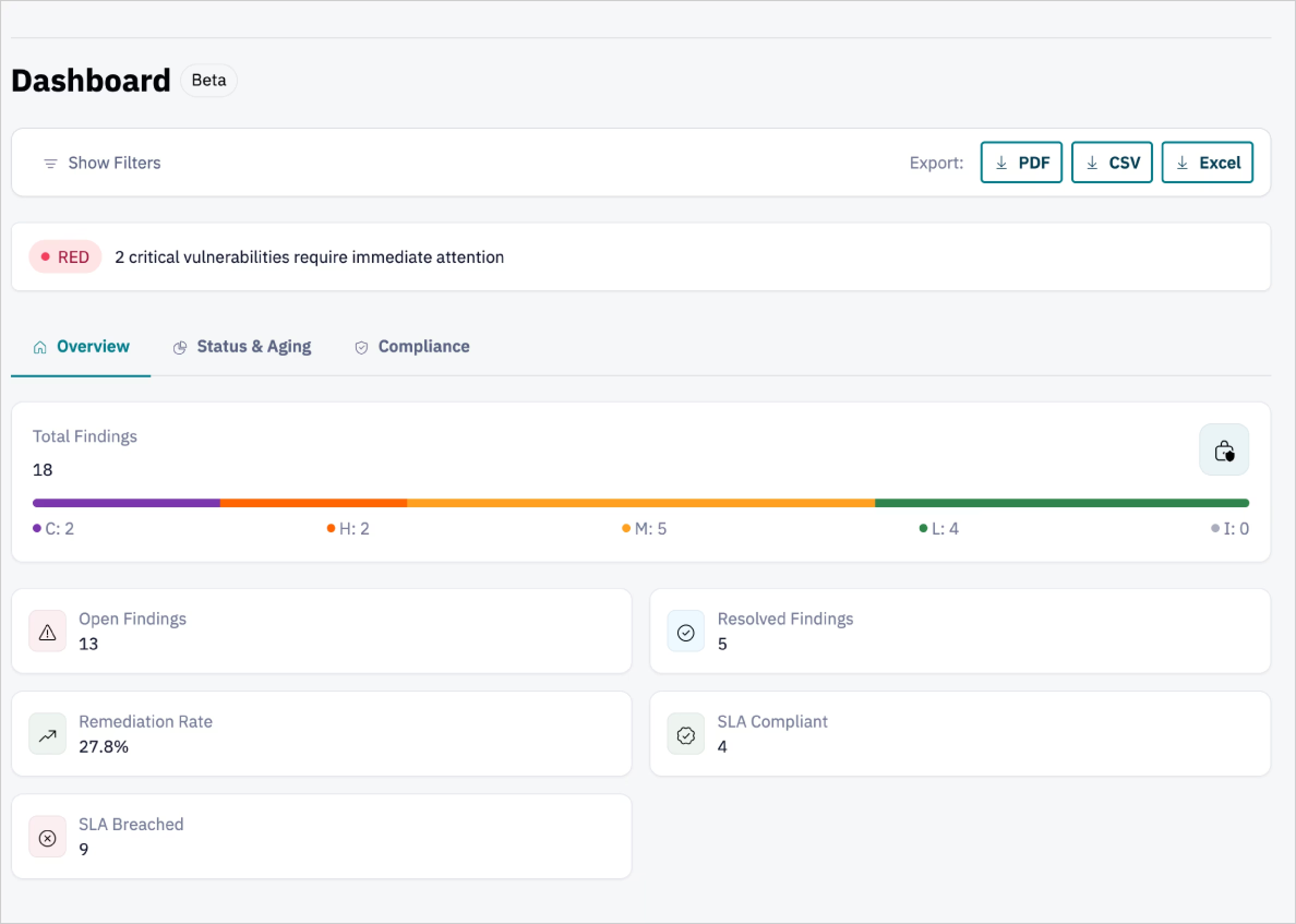
Remediation workspace
Track validated findings, owners, fixes, and available validation evidence in one place.

Shareable reporting
Share scope, methodology, findings, and remediation status with security, content, risk, and assessment teams.

CREST-accredited provider
Work with a named testing team, reviewed findings, and direct access throughout the engagement.

Reusable technical evidence
Use relevant findings in other assurance work where scope and requirements align.

Fix validation
Confirm whether agreed fixes address the original finding when validation is included.
Reuse relevant findings
Some findings may support other assurance work when scope and requirements align. Each framework retains its own assessment obligations.

ISO 27001
Use relevant findings in ISO 27001 risk, vulnerability-management, and control-improvement work.
SOC 2
Use relevant findings to support security-control evidence where systems and requirements overlap.
Frequently asked questions

Services that support content-security readiness
Complement TPN penetration testing with broader security validation, adversary simulation, and program guidance.

Penetration Testing
Test web applications, APIs, mobile, cloud, and networks for exploitable weaknesses and clear remediation priorities.
.avif)
Adversary Simulation
Red team and purple team exercises that test how your organization detects, responds to, and contains realistic attack scenarios.

vCISO & Advisory
Fractional security leadership to build your program, navigate compliance, and guide your security roadmap.
Ready to scope your TPN pentest?
Get a focused testing plan for the systems and workflows handling valuable media content.
