HIPAA Penetration Testing for Healthcare
Test patient portals, healthcare applications, APIs, cloud environments, and networks that handle ePHI. Get validated findings, clear remediation guidance, and reporting aligned to relevant HIPAA Security Rule safeguards.

HIPAA pentesting for systems that handle ePHI
Focus testing on the applications, access paths, and infrastructure that could expose patient data or disrupt care.
Test the controls protecting ePHI
Assess authentication, authorization, data integrity, session handling, encryption boundaries, and transmission security through realistic attack paths.
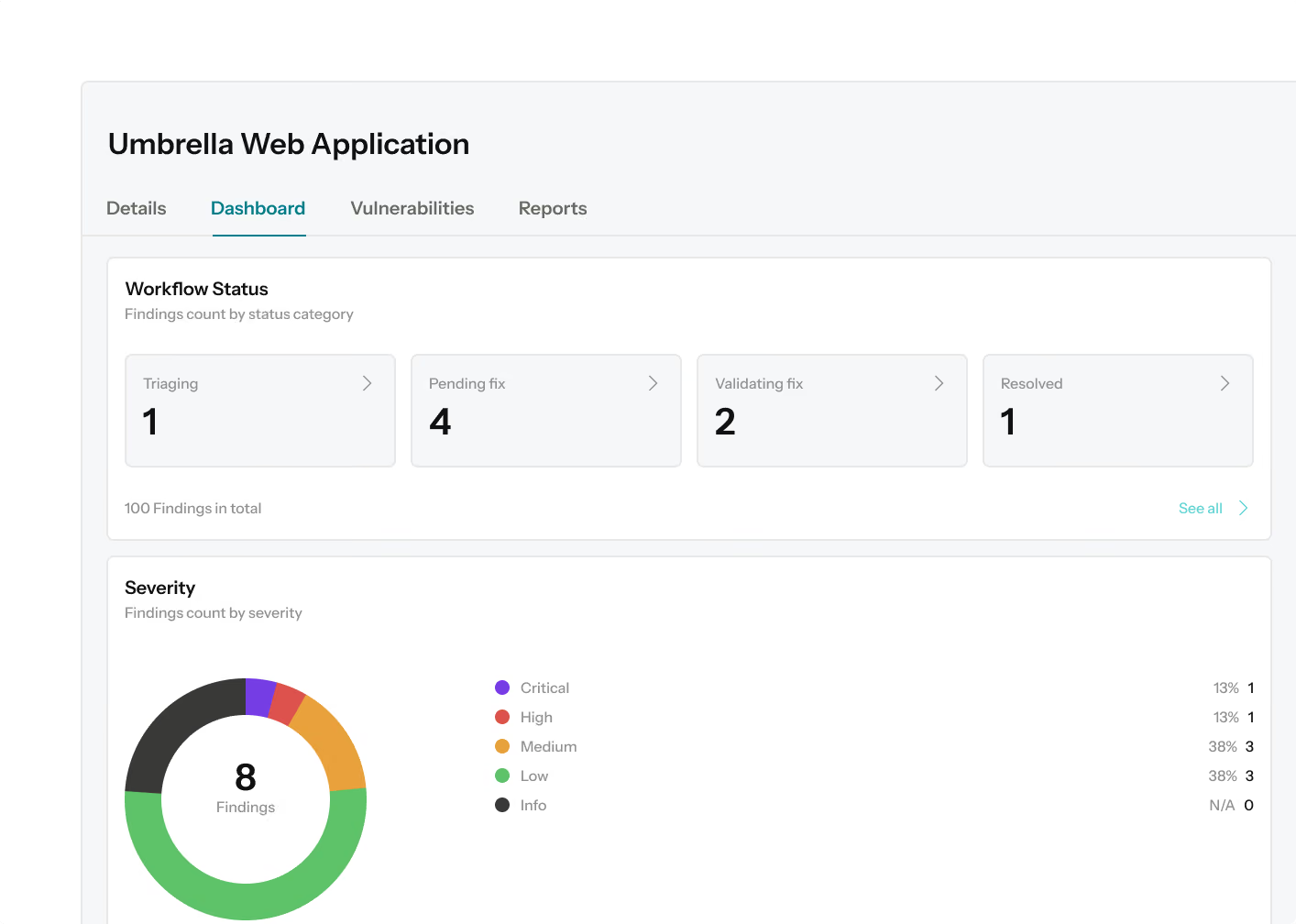
Follow ePHI across the attack surface
Scope patient portals, healthcare APIs, telehealth platforms, cloud services, identity systems, external infrastructure, and connected networks.
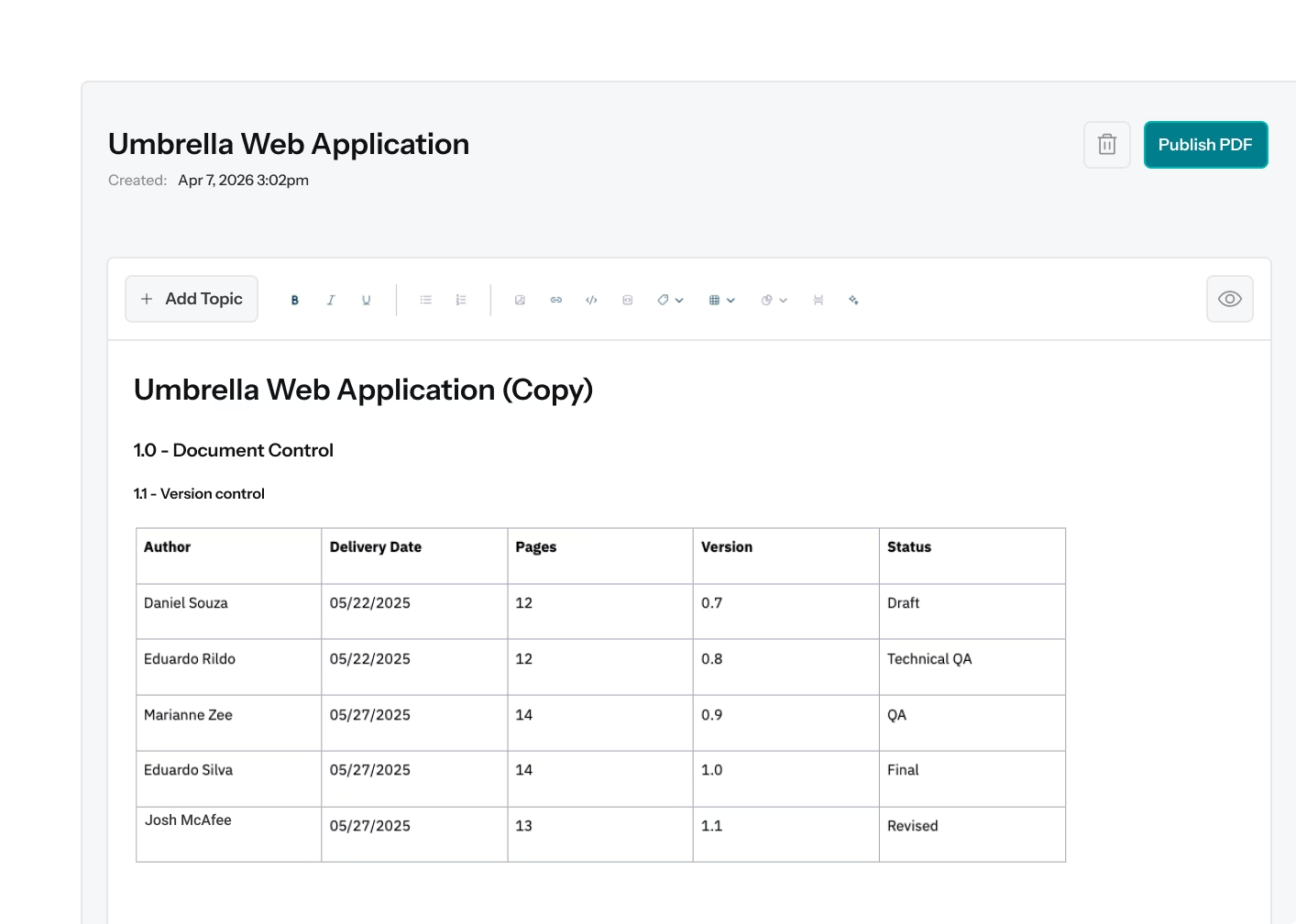
Track findings through remediation
Use the Blaze Portal to assign findings, document fixes, and keep available validation evidence organized for security and compliance teams.
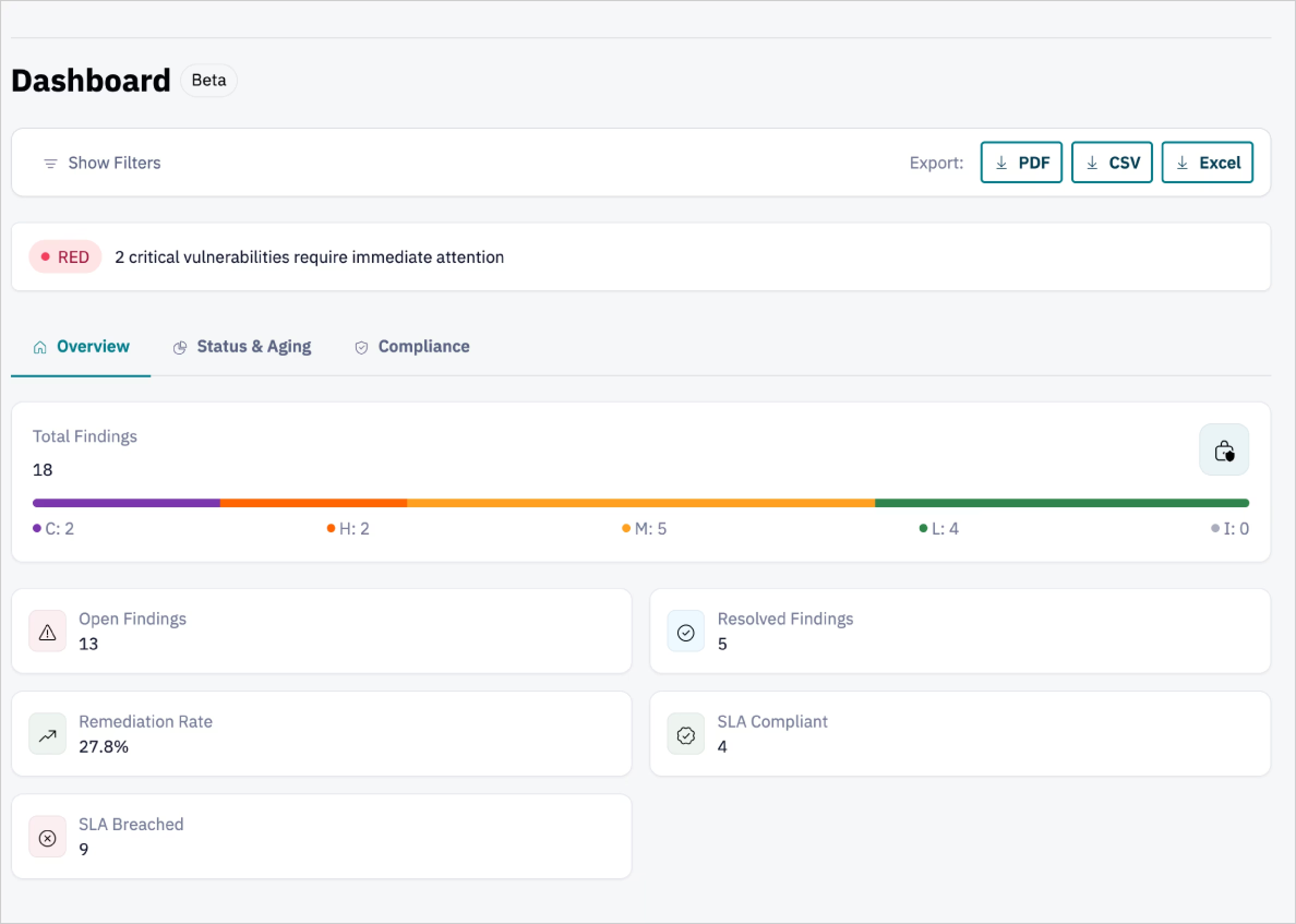
Where penetration testing supports HIPAA
Testing can support required risk analysis and periodic evaluation. It does not replace a HIPAA compliance assessment.
Safeguard
How Blaze helps support it
§164.312(a)
Access Control
Tests whether applications, APIs, systems, and user roles limit ePHI access to authorized users and approved workflows.
§164.312(c)
Integrity
Assesses whether ePHI could be improperly altered, destroyed, or manipulated through application, API, or authorization weaknesses.
§164.312(d)
Person or Entity Authentication
Tests the authentication mechanisms used to verify users, services, or systems seeking access to ePHI.
§164.312(e)
Transmission Security
Assesses whether ePHI is protected against unauthorized access while transmitted across applications, APIs, networks, and integrations.
§164.308(a)(8)
Evaluation
Provides the technical assessment evidence that supports periodic evaluation of safeguards protecting ePHI.
Clear evidence for security and compliance teams
A HIPAA penetration test should help engineers fix risk and give reviewers a defensible record of what was tested.

Relevant safeguard context
Connect validated findings to relevant HIPAA Security Rule safeguards without treating the pentest as a compliance assessment.

Remediation workspace
Track findings, owners, fixes, and available validation evidence in one place.

Shareable reporting
Share scope, methodology, findings, and remediation status with internal and external reviewers.

CREST-accredited provider
Findings are reviewed before delivery, with direct access to the people assigned to the engagement.

Reusable technical evidence
Use relevant findings in other assurance work where scope and requirements align.

Fix validation
Confirm whether agreed fixes address the original finding when validation is included.
Reuse relevant findings
Some findings may support other assurance work when scope and requirements align. Each framework still has its own assessment obligations.

Frequently asked questions

Build the right healthcare security program
Add focused testing or security leadership where your HIPAA risk analysis identifies a need.

Penetration Testing
Test web applications, APIs, mobile, cloud, and networks against the attack paths most likely to affect ePHI.
.avif)
Adversary Simulation
Run red team and purple team exercises to test detection, response, and containment against realistic attack scenarios.

vCISO & Advisory
Get fractional security leadership for risk analysis, policies, remediation priorities, and customer or auditor requests.
Ready to scope a HIPAA pentest?
Tell us which systems handle ePHI and what evidence your team needs. We’ll help define the scope, timeline, and fixed quote.
