Amazon SP-API penetration testing
Pentest the applications, APIs, cloud, and networks handling Amazon data. Get validated findings and remediation guidance to support applicable Amazon Data Protection Policy requirements.

Pentest the systems behind your SP-API integration
We define coverage around your Amazon data flows, integration architecture, and applicable requirements.
Pentest the systems that actually handle Amazon data
Map the SP-API data flow from authorization and backend APIs through databases, storage, cloud services, and network boundaries, then focus testing on the assets that process, store, or protect that data.
Go beyond scanners on your SP-API integration
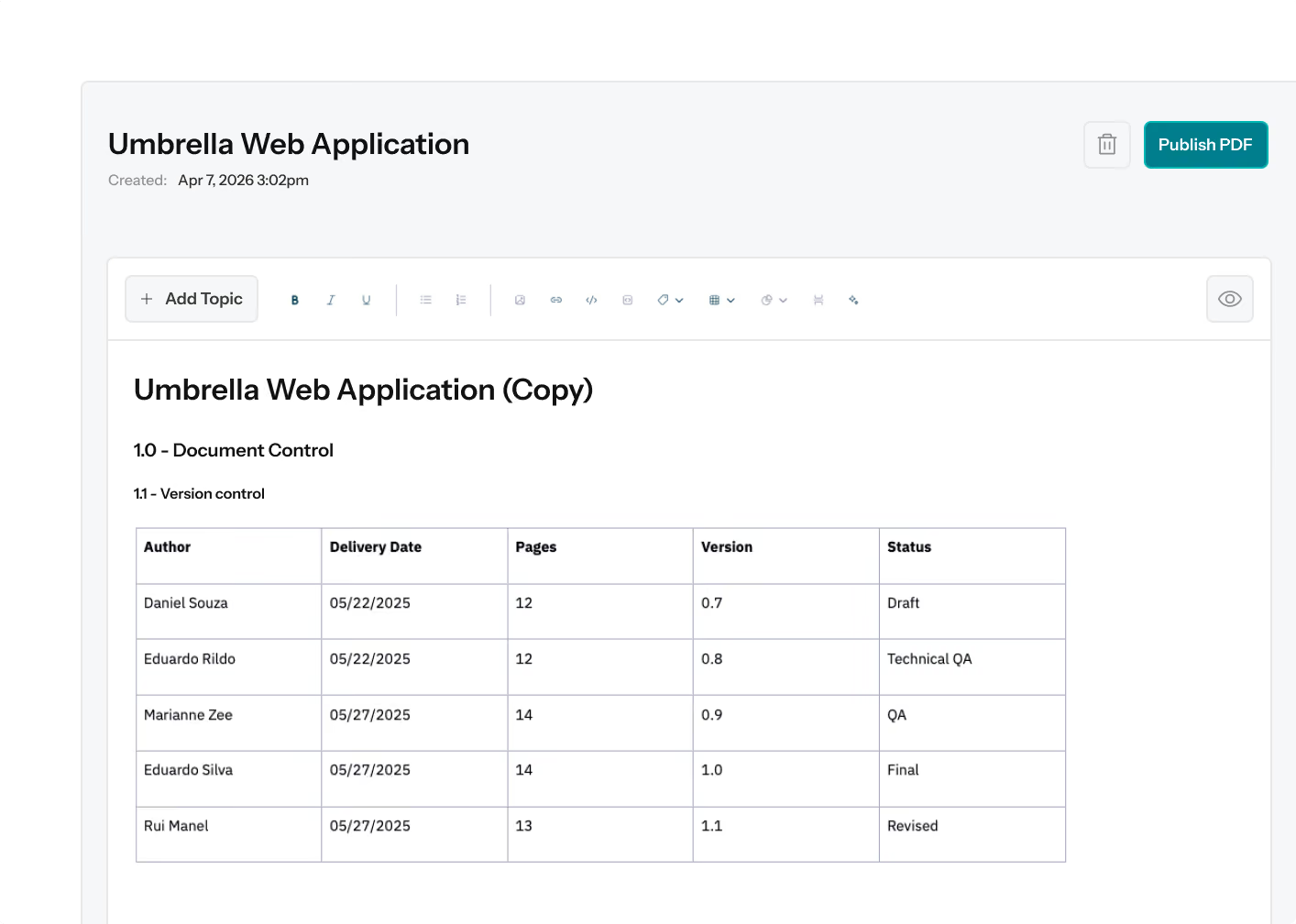
Manually pentest authentication, authorization, business logic, secrets, and restricted-data flows, with AI-assisted analysis where needed. Researchers validate every reported finding.
Fix findings inside Amazon’s remediation windows
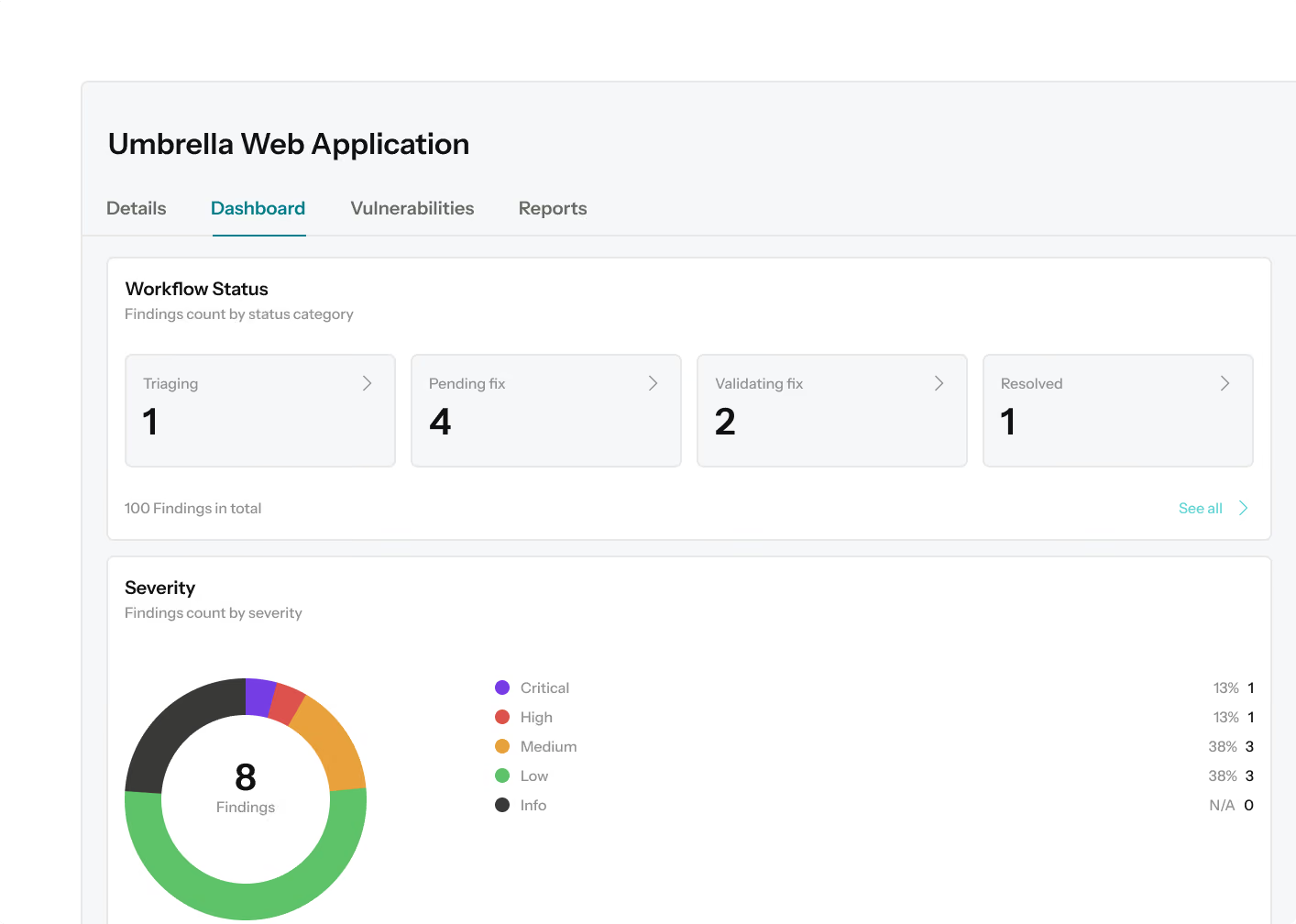
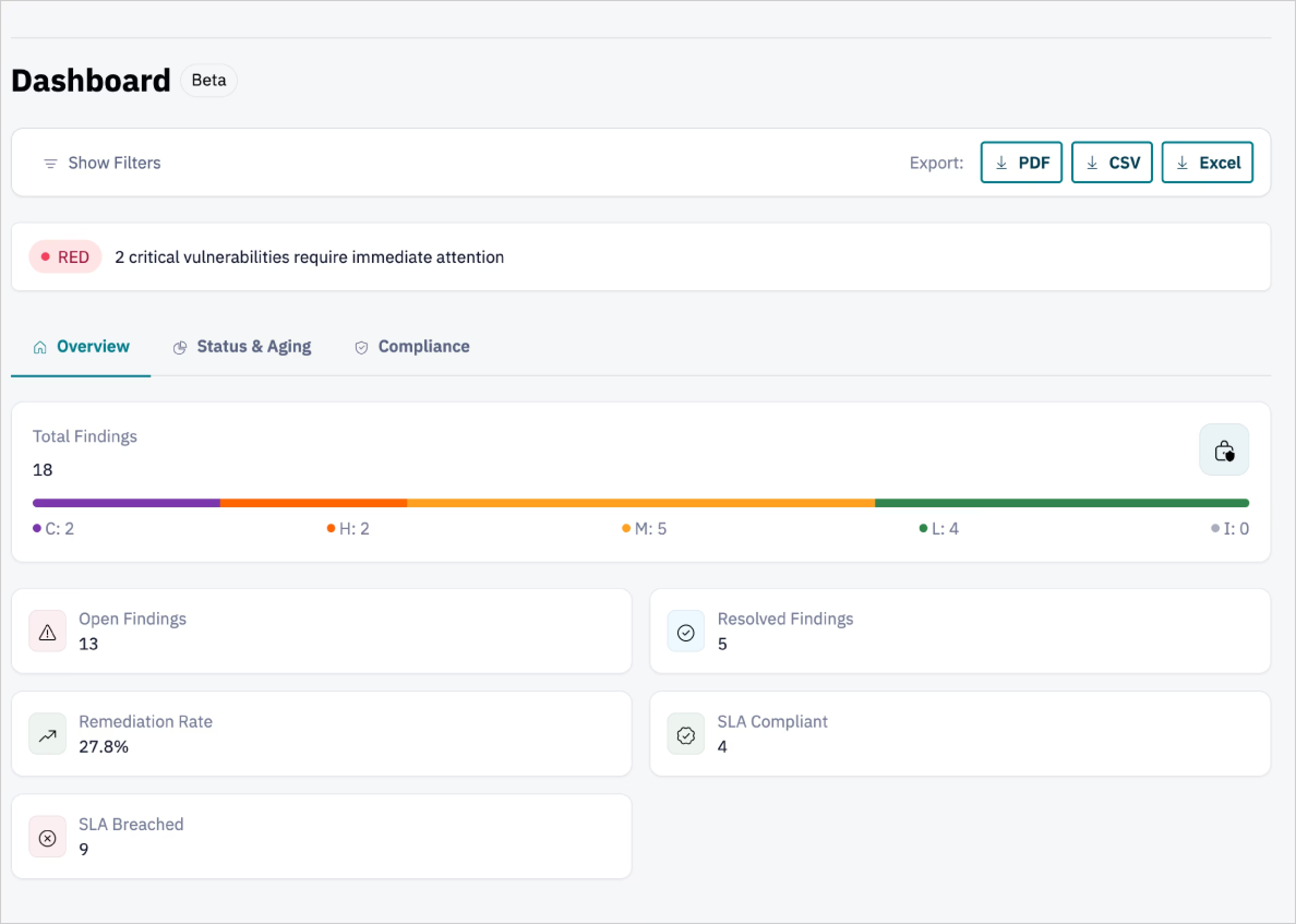
Prioritize critical and high-risk issues, track remediation in the Blaze Portal, and validate fixes when included—so your team can maintain evidence of what was found and resolved.
How your pentest supports Amazon’s security review
Your assessment provides technical evidence for relevant controls. Amazon’s broader review also covers policies, processes, and operational security; Amazon determines acceptance.
Amazon DPP area
Evidence from Blaze
Annual test
Applicable annual pentest requirement
Methodology, coverage, and validated findings for in-scope assets
Access
Authentication & authorization
Technical evidence on roles, privileges, seller isolation, and restricted-data access
Cloud
Infrastructure & storage
Findings on cloud configuration, storage exposure, secrets, and network paths
Data
Protection of Amazon data
Technical evidence on encryption, storage boundaries, and data access
Remediation
Vulnerability management
Prioritized findings and agreed retest evidence; ongoing scanning is separate
Manual pentesting, with AI support where needed.
See what is exploitable across your SP-API application and supporting environment, with practical remediation guidance and evidence that supports your Amazon security review.

Amazon DPP-aligned scope
Scope network infrastructure, cloud environments, web applications, APIs, databases, storage, and other in-scope systems that process, store, or transmit Amazon data.

API & business-logic pentesting
Researchers manually investigate authorization flaws, business logic, and integration risks, using AI-assisted analysis where useful. Every reported finding is validated.

Cloud & infrastructure coverage
Assess exposed services, IAM and privilege paths, storage, network segmentation, configurations, and the cloud controls surrounding your SP-API application.

Evidence-ready reporting
Receive scope, methodology, validated findings, evidence, reproduction steps, business impact, and remediation guidance in a report your team can retain for review.

Remediation prioritization
Prioritize critical and high-risk vulnerabilities against Amazon’s published remediation timelines and keep ownership and status visible in the Blaze Portal.

Fix validation
Confirm whether remediation closes the reported attack path when fix validation is included in your selected package or annual program.
Reuse relevant evidence across assurance work
Reuse pentest findings across other audits where scope and requirements overlap.

ISO 27001
Use relevant application, cloud, IAM, vulnerability-management, and remediation evidence to support ISMS risk treatment where scope overlaps.
SOC 2
Use validated application, API, cloud, and access-control findings to support security criteria and customer assurance where scope overlaps.
Frequently asked questions
Practical questions about Amazon DPP scope, annual testing, SP-API Guard, deliverables, remediation, and fix validation.

Amazon places the annual penetration testing requirement in the DPP’s additional requirements for personally identifiable information (PII). We confirm applicability against your data access, restricted roles, and any assessment request from Amazon.
Scope follows your Amazon data: applications, APIs, cloud services, network boundaries, databases, and storage. We test the systems you control using an industry-recognized methodology, with coverage agreed before testing.
Where the DPP’s annual testing requirement applies, conduct a penetration test at least every 365 days. Amazon’s guidance also calls for validation after remediation. Vulnerability scans and pre-release code scans are separate activities.
No. Amazon treats vulnerability scanning, pre-release code scanning, and penetration testing as separate activities. SP-API Guard helps assess AWS configurations against DPP controls; it does not replace a penetration test.
We test your authorized applications, integration, and supporting environment—not Amazon’s own API infrastructure. Coverage follows how your systems process, store, and transmit Amazon data.
Receive scope, methodology, validated findings, severity, evidence, and remediation guidance. This supports technical testing and remediation evidence; it does not replace Amazon’s broader assessment of governance, privacy, and operational controls or guarantee approval.
Your proposal specifies retest coverage and timeframe. Fix validation is included or available depending on the selected engagement. Retesting checks whether remediation resolves the reported findings within the agreed scope.
Recommended services
Complement SP-API assurance with broader application testing, red teaming, or security-program support.

Penetration Testing
Manual testing across web apps, APIs, mobile, cloud, and networks, with AI-assisted analysis used selectively and every delivered finding validated by a researcher.
.avif)
Adversary Simulation
Red team and purple team exercises that test how your organization detects, responds to, and contains realistic attack scenarios.

vCISO & Advisory
Fractional security leadership to build your program, navigate compliance, and guide your security roadmap.
Prepare your SP-API integration for security review
Share your architecture, Amazon data access, and assessment deadline. We’ll help define the testing scope and next steps.
