TX-RAMP Penetration Testing for Texas Cloud Providers
Prepare your SaaS, PaaS, or IaaS cloud service for TX-RAMP Level 1 or Level 2 with penetration testing, cloud security assessment, remediation validation, and technical evidence.
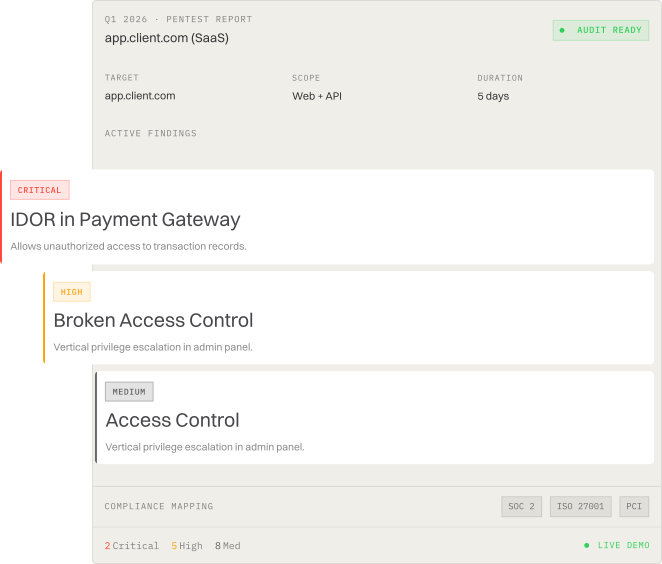
Technical readiness for TX-RAMP Level 1 or Level 2
Validate the cloud service boundary before assessment, close exploitable gaps, and keep vulnerability evidence usable for remediation and continuous monitoring.
Validate the controls behind your TX-RAMP submission
Test the applications, APIs, cloud configuration, identities, and exposed infrastructure that support the in-scope cloud service.
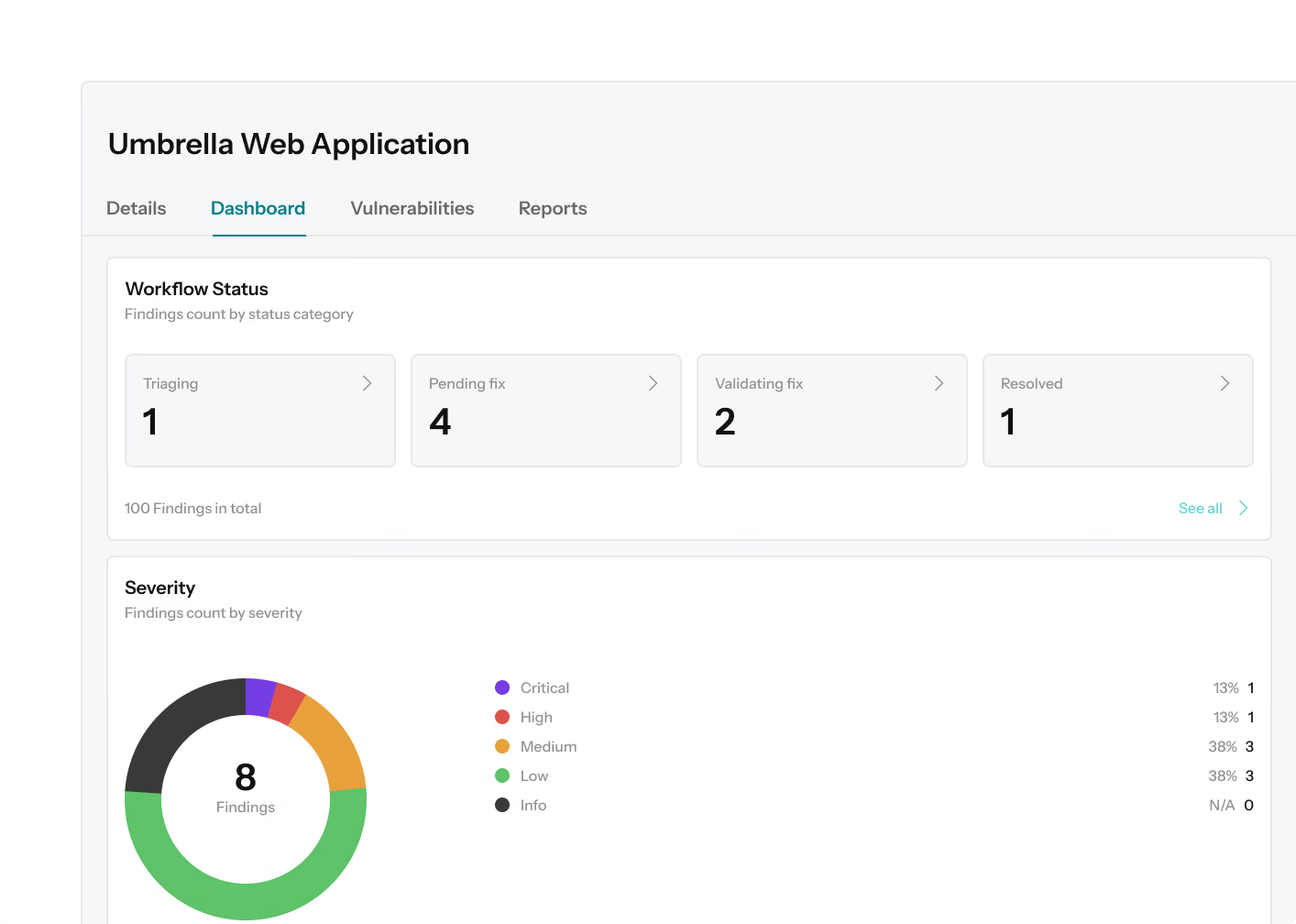
Test the service, not just the underlying cloud
Assess the SaaS, PaaS, or IaaS service as its own security boundary, including the controls your product cannot simply inherit from an underlying provider.
Keep vulnerability evidence current after certification
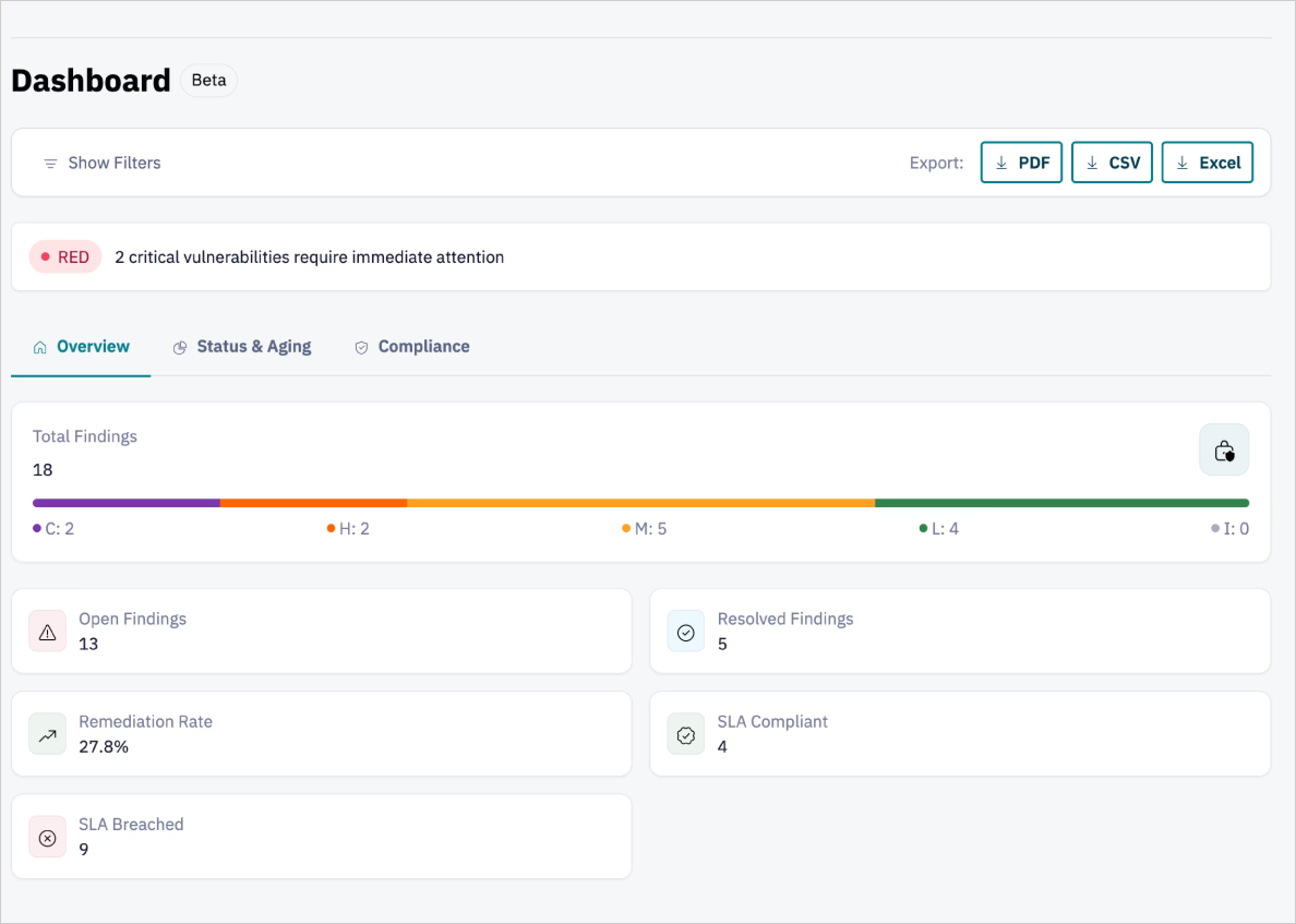
Support recurring vulnerability reporting with validated findings, remediation status, and fix validation tied to the certified cloud service.
What Blaze can assess
Focused testing of the technical controls and attack paths inside your TX-RAMP cloud-service boundary.
What we test
Application and API security
Authentication, authorization, business logic, tenant isolation, input handling, data exposure, and abuse paths.
Cloud configuration
IAM, network boundaries, storage, encryption, secrets, logging, monitoring, backups, and exposed services.
Identity and privileged access
Administrative roles, service accounts, trust relationships, MFA, session controls, and escalation paths.
External attack surface
Public applications, APIs, domains, cloud services, administrative interfaces, and exposed infrastructure.
Remediation validation
Re-test agreed fixes and document the updated state when validation is included in the selected package or program.
Significant changes
Targeted security testing after material architecture, data-processing, cryptographic, platform, or control changes that may affect the certified cloud service.
Evidence your team can use through the TX-RAMP process
Testing outputs for assessment, remediation, Fast Track gap closure, and ongoing vulnerability reporting. TX-RAMP—not Blaze—determines certification.

Penetration testing
Manual testing across the agreed cloud-service scope, with exploitable findings validated before reporting.

Cloud security assessment
Review cloud configuration, identity, network boundaries, logging, storage, encryption, and attack paths inside the service environment.

Evidence-ready reporting
Document scope, methodology, evidence, risk, reproduction steps, remediation, and limitations in a format your team can reuse.

Live remediation tracking
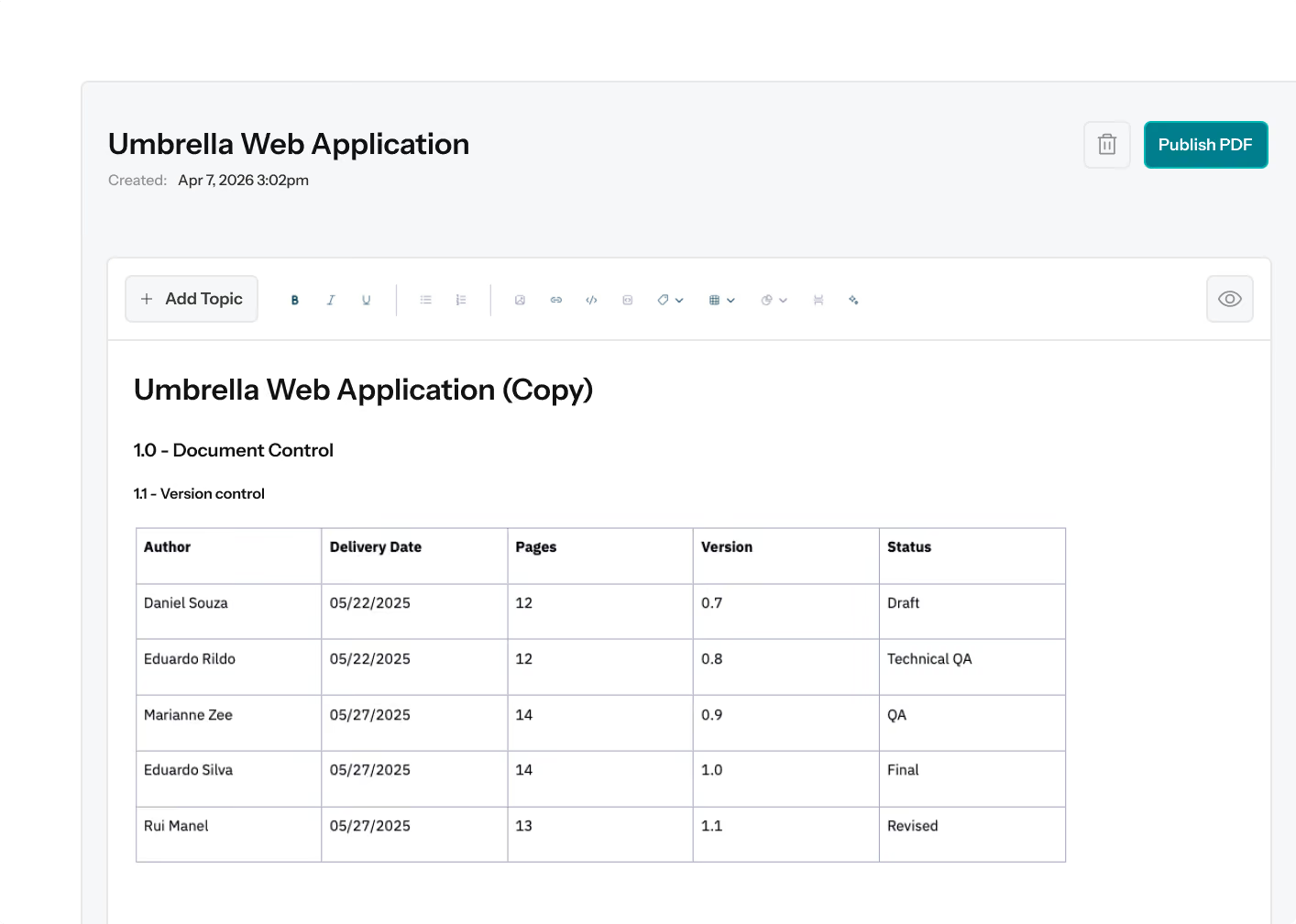
Manage validated findings, owners, status, and evidence in the Blaze Portal instead of relying on static PDFs and spreadsheets.

Fast Track evidence support
Identify relevant, current third-party artifacts for the cloud service and organize evidence around gaps TX-RAMP may still need reviewed. Fast Track eligibility remains at TX-RAMP's discretion.

Fix validation
Re-verify agreed fixes and provide updated evidence when validation is included in the selected package or annual program.
TX-RAMP compliance questions

Recommended services
Technical services for cloud providers preparing for TX-RAMP assessment, remediation, and ongoing vulnerability reporting.

Penetration Testing
Manual testing across web applications, APIs, mobile, cloud, and networks, with validated findings and clear remediation guidance.
.avif)
Cloud Security Assessment
Review cloud configuration, identity, network boundaries, logging, storage, encryption, and attack paths inside the service environment.

Penetration Testing as a Service
Use annual testing credits, centralized findings, remediation tracking, and planned validation to maintain security evidence across the year.
Ready to validate your TX-RAMP scope?
Share your cloud-service boundary, target level, assessment timeline, and known gaps. We’ll scope the testing and validation work that makes sense.
